
The Genius of Beethoven
Ludwig van Beethoven is undoubtedly one of the most famous composers in history. His music continues to be celebrated for its emotional depth and complexity, and his influence on Western classical music is immeasurable. However, there is one aspect of Beethoven's life that has long fascinated scholars and music lovers alike: his deafness.

Early Signs of Deafness
Beethoven first began to experience hearing loss in his late twenties. He reported a ringing in his ears, which was soon followed by difficulty hearing high-pitched sounds. Over time, his hearing deteriorated further, until he was completely deaf by the age of 46. Despite this, Beethoven continued to compose music until his death in 1827.

Beethoven's Hearing Aids
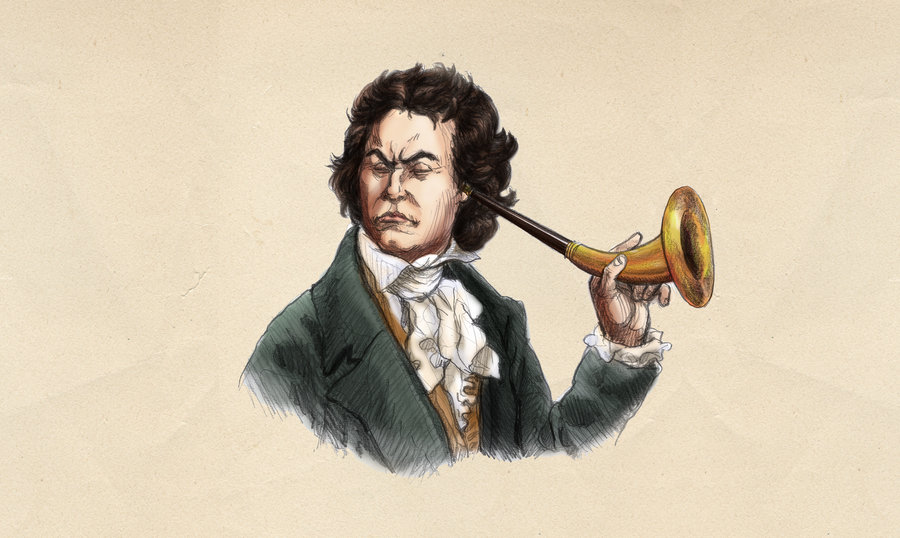
Throughout his life, Beethoven tried various hearing aids in an attempt to improve his hearing. These included ear trumpets, which were essentially funnel-shaped devices that amplified sound. Beethoven also experimented with bone conduction, placing a rod between his teeth that transmitted sound vibrations to his inner ear. However, these methods were only partially effective, and Beethoven eventually abandoned them altogether.
The Effect on Beethoven's Music
Despite his deafness, Beethoven continued to compose some of his greatest works. In fact, some of his most famous pieces, including his Ninth Symphony and the late string quartets, were composed after he had become completely deaf. Beethoven's deafness is often cited as a factor in the increased emotional intensity of his later works. Without the ability to hear, Beethoven was forced to rely on his inner musical imagination to compose, resulting in music that was more personal and introspective.

The Legacy of Beethoven's Deafness
Beethoven's deafness has had a profound impact on the way we think about music and disability. His perseverance in the face of such a debilitating condition is an inspiration to many, and his ability to create such beautiful and complex music without being able to hear it is nothing short of miraculous. Beethoven's deafness has also inspired countless musicians to continue creating music despite physical limitations, and has helped to break down barriers between the able-bodied and the disabled.
Conclusion
Beethoven's deafness remains one of the most fascinating aspects of his life and work. Despite the challenges he faced, he continued to compose music of unparalleled emotional depth and complexity, leaving a lasting legacy that continues to inspire musicians and music lovers around the world.