
The Cold War was a state of geopolitical tension between the Western Bloc, led by the United States, and the Eastern Bloc, led by the Soviet Union, that lasted from 1947 to 1991. The early years of the Cold War were marked by a series of events that set the stage for the decades-long conflict.
Origins of the Cold War
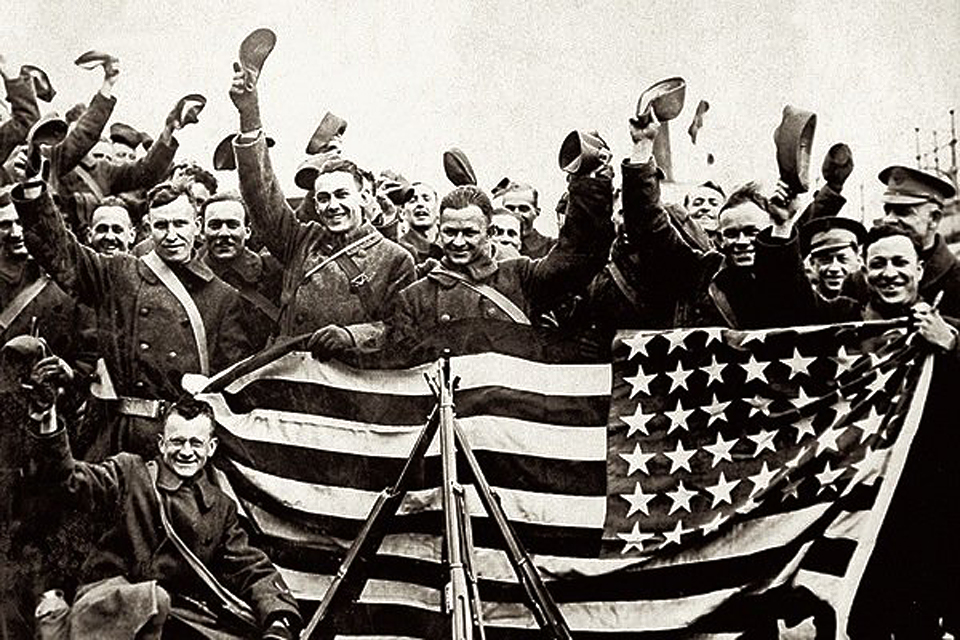
The origins of the Cold War can be traced back to the end of World War II. The United States and the Soviet Union emerged as the two superpowers of the world, but they had vastly different ideologies. The United States was a capitalist democracy, while the Soviet Union was a communist state. The two nations were suspicious of each other's intentions and interests.
The first major event of the Cold War took place in 1947 when the United States announced the Truman Doctrine. This policy was aimed at containing Soviet expansion and preventing the spread of communism. The United States provided economic and military aid to countries threatened by communist expansion, such as Greece and Turkey.
The Berlin Blockade

In 1948, the Soviet Union imposed a blockade on Berlin, cutting off all land, air, and water access to the city. The United States responded by launching a massive airlift, delivering food, fuel, and supplies to the people of Berlin. The blockade lasted for almost a year, but the United States and its allies successfully kept the city supplied.
The Korean War

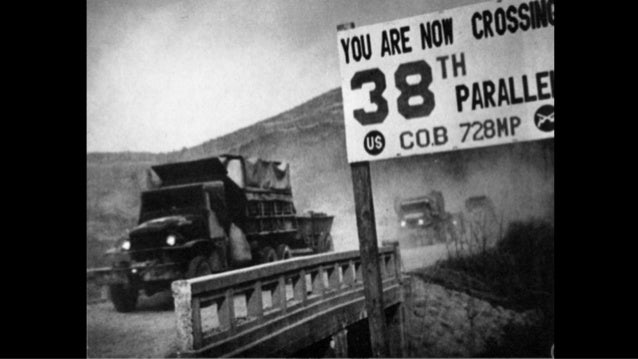
In 1950, North Korea invaded South Korea, igniting the Korean War. The United States and its allies intervened to support South Korea, while the Soviet Union and China supported North Korea. The war lasted for three years and resulted in a stalemate, with the two Koreas remaining divided to this day.
The Cuban Revolution

In 1959, Fidel Castro led a revolution in Cuba, overthrowing the U.S.-backed dictator Fulgencio Batista. The Soviet Union saw an opportunity to gain a foothold in the Western Hemisphere and began providing economic and military aid to Cuba. The United States responded with a trade embargo and a failed attempt to overthrow Castro in the Bay of Pigs invasion.
The Space Race

In the late 1950s and early 1960s, the United States and the Soviet Union engaged in a competition to explore space. This competition, known as the Space Race, saw the two nations develop new technologies and achieve many milestones in space exploration. The Soviet Union became the first nation to launch a satellite, while the United States became the first nation to land a man on the moon.
The Arms Race

The Cold War was also marked by an arms race between the United States and the Soviet Union. Both nations developed and stockpiled nuclear weapons, leading to a dangerous standoff known as Mutually Assured Destruction (MAD). The arms race was a major factor in the tensions between the two superpowers.
The Bay of Pigs Invasion

In 1961, the United States attempted to overthrow Fidel Castro in Cuba with a covert operation called the Bay of Pigs invasion. The plan was a failure, with the Cuban forces easily defeating the U.S.-backed rebels. The invasion embarrassed the United States and strengthened the Soviet Union's position in the Cold War.
The Cuban Missile Crisis

In 1962, the Soviet Union began installing nuclear missiles in Cuba, just 90 miles from the United States. The United States responded with a naval blockade and demanded the removal of the missiles. The standoff lasted for almost two weeks and brought the world to the brink of nuclear war. Eventually, the Soviet Union agreed to remove the missiles in exchange for a U.S. promise not to invade Cuba.
The Vietnam War
The Vietnam War was a conflict between communist North Vietnam and U.S.-backed South Vietnam that lasted from 1955 to 1975. The war was a major source of tension between the United States and the Soviet Union, with the Soviet Union providing military and economic aid to North Vietnam. The war ended with the fall of Saigon and the unification of Vietnam under communist rule.
The Prague Spring

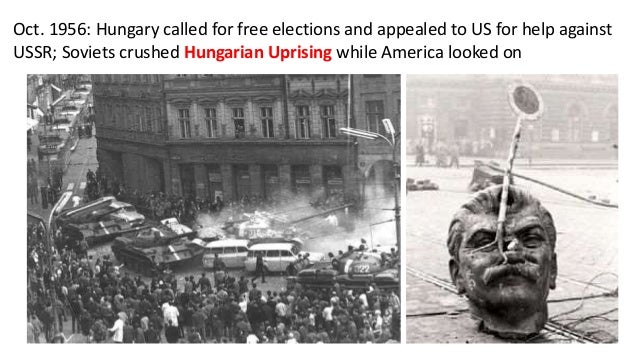
In 1968, Czechoslovakia experienced a period of political liberalization known as the Prague Spring. The Soviet Union, fearing the spread of democracy and dissent, invaded Czechoslovakia and installed a pro-Soviet government. The invasion highlighted the Soviet Union's willingness to use force to maintain its control over Eastern Europe.
The Strategic Arms Limitation Talks (SALT)

In the 1970s, the United States and the Soviet Union engaged in a series of talks aimed at reducing the number of nuclear weapons in their arsenals. These talks, known as the Strategic Arms Limitation Talks (SALT), resulted in two treaties that limited the number of nuclear weapons each side could possess. The treaties were an important step in reducing tensions between the two superpowers.
The Soviet Invasion of Afghanistan
In 1979, the Soviet Union invaded Afghanistan, sparking a long and bloody conflict. The United States and its allies provided support to the Afghan resistance, known as the Mujahideen, which played a significant role in defeating the Soviet forces. The war was a major drain on the Soviet Union's resources and contributed to its eventual collapse.
The Fall of the Berlin Wall

In 1989, the Berlin Wall, which had symbolized the divide between East and West during the Cold War, was torn down. This event marked the beginning of the end of the Cold War and the reunification of Germany. The collapse of the Soviet Union in 1991 marked the end of the Cold War.
Conclusion
The early years of the Cold War were marked by a series of events that set the stage for the decades-long conflict. The United States and the Soviet Union engaged in a competition for power and influence that shaped the world for generations. The Cold War was a defining period of the 20th century, and its legacy continues to be felt today.