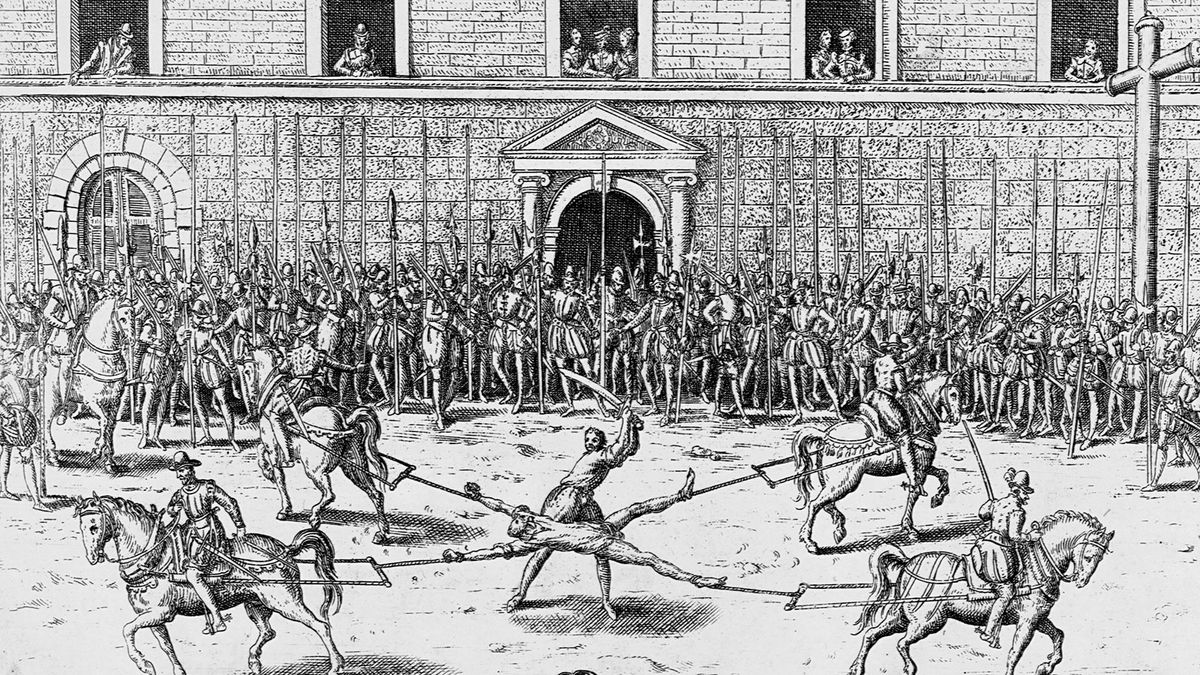
The drawn and quartered execution was a brutal form of punishment that was used in England during the medieval period. This form of execution was reserved for individuals who were convicted of high treason, which was considered one of the most heinous crimes one could commit against the state.
What is Drawn and Quartered Execution?

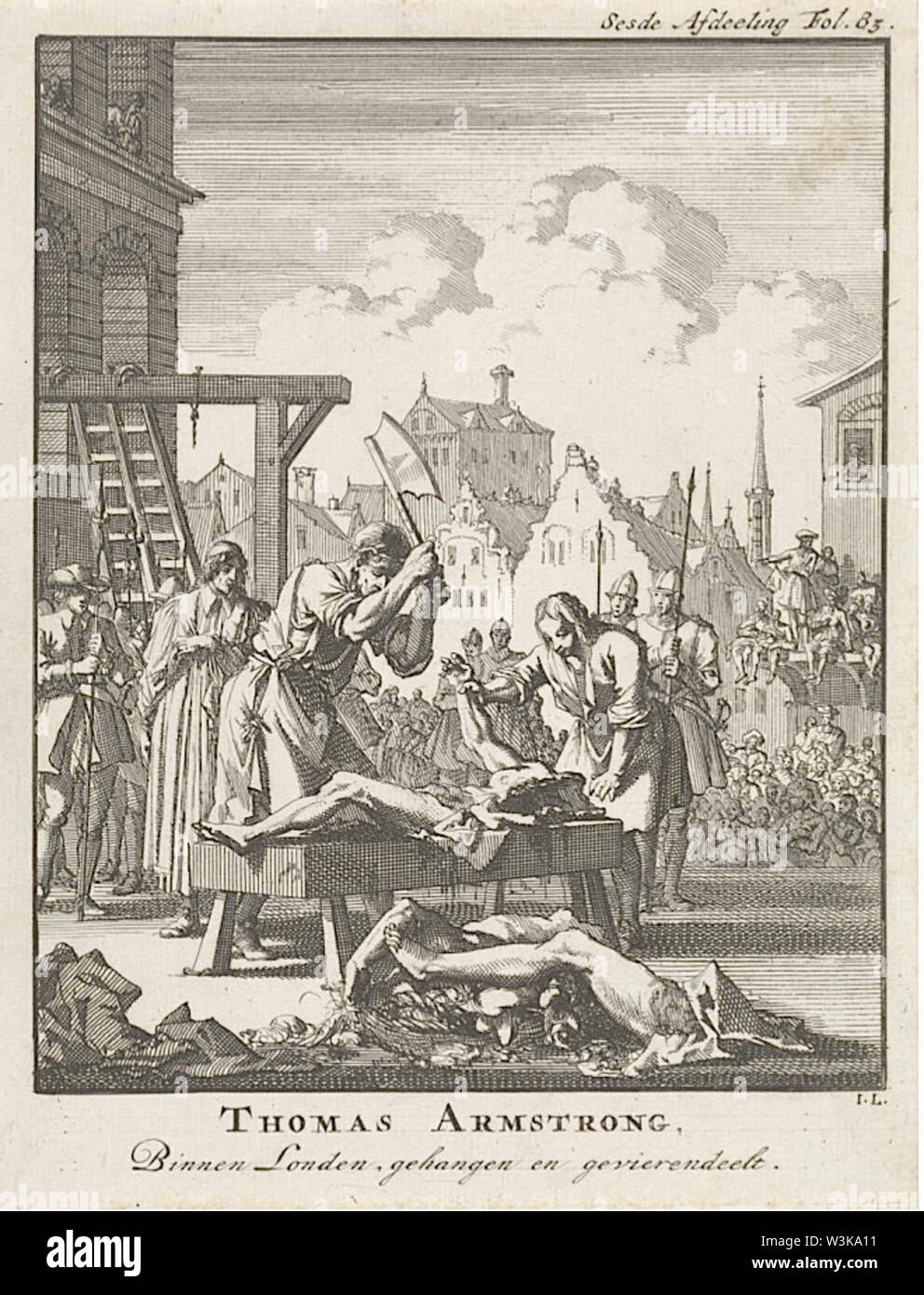
The drawn and quartered execution involved several stages. First, the condemned person was dragged through the streets, usually by a horse. This was known as being "drawn." The individual was then hanged, but not to the point of death. After this, the person was disemboweled and their entrails were burned in front of them. Finally, the body was divided into four parts, or "quartered."
Origins of the Drawn and Quartered Execution
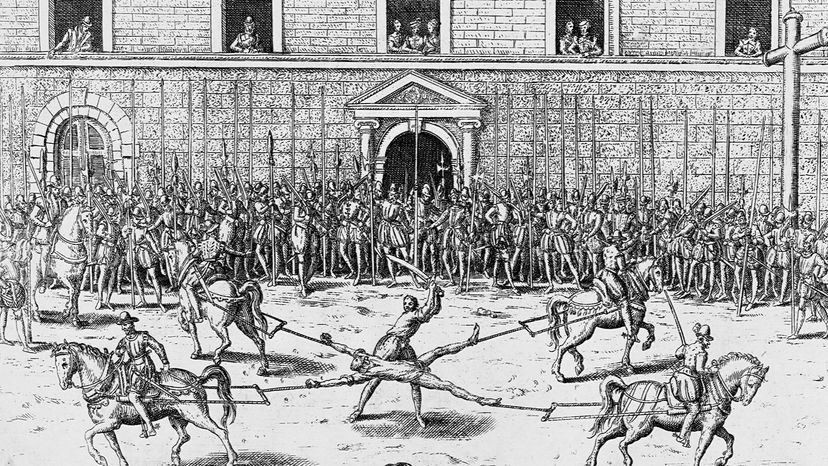
The origins of the drawn and quartered execution can be traced back to medieval times. It was a punishment that was typically reserved for high-profile or political crimes, such as treason or rebellion. The punishment was intended to be a public spectacle and a warning to others who may have been considering committing similar crimes.
Notable Examples of Drawn and Quartered Executions
Perhaps the most famous example of a drawn and quartered execution was that of William Wallace, the Scottish warrior who fought for Scottish independence. After being captured by the English, he was subjected to this brutal punishment in 1305.
Another notable example was that of Guy Fawkes, who was involved in the Gunpowder Plot of 1605. Fawkes and his co-conspirators had planned to blow up the House of Lords during the State Opening of Parliament, but their plot was foiled. Fawkes was subsequently subjected to a drawn and quartered execution.
The End of the Drawn and Quartered Execution

The drawn and quartered execution was abolished in England in 1870. It was replaced with hanging as the standard form of capital punishment. Today, the death penalty has been abolished in England, and the last execution in the country took place in 1964.
Controversy Surrounding the Drawn and Quartered Execution
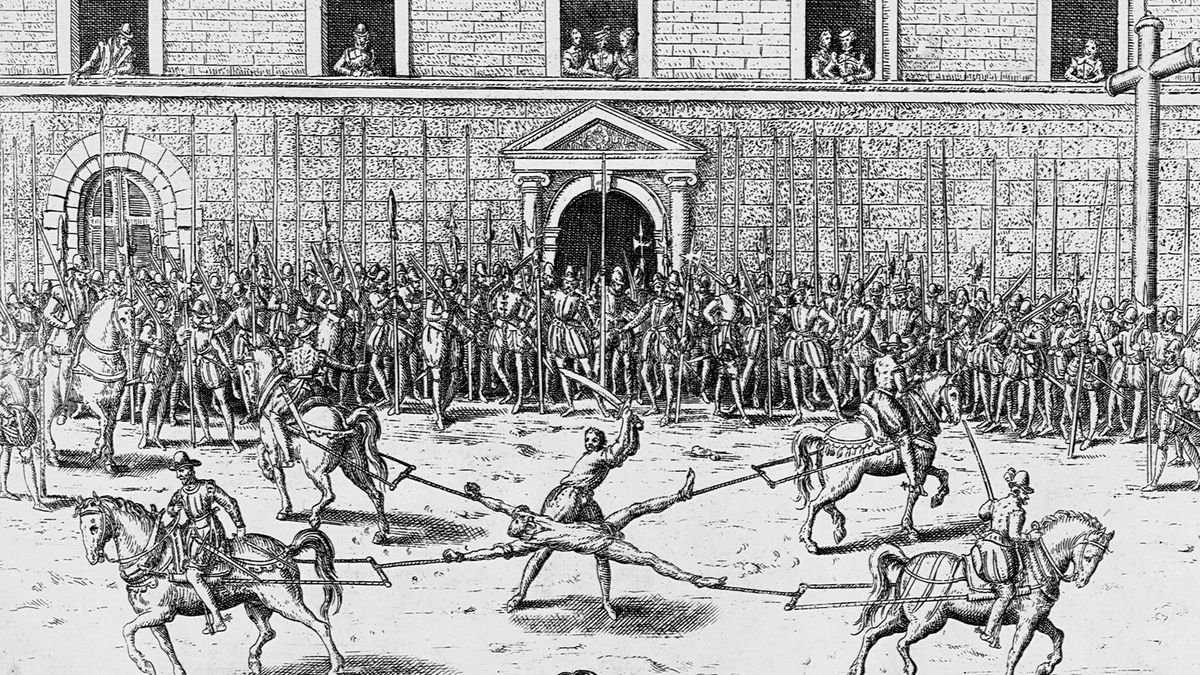
The drawn and quartered execution has been the subject of much controversy over the years. Some argue that it was a necessary form of punishment for those who committed crimes against the state, while others view it as a barbaric and inhumane practice.
There are also those who argue that the drawn and quartered execution was used as a means of suppressing political dissent, and that it was often used to silence those who spoke out against the government.
Conclusion
The drawn and quartered execution was a brutal form of punishment that was used in England during the medieval period. It was reserved for those who were convicted of high treason, and involved several stages, including being drawn, hanged, disemboweled, and quartered.
While the drawn and quartered execution has been abolished in England, it remains a part of the country's history, and continues to be a subject of debate and controversy to this day.