
Keeping a fish bowl at home is a popular way to add a touch of nature to your living space. Goldfish, in particular, are a favorite choice for many people. They are easy to care for, come in a variety of colors, and are relatively inexpensive. In this guide, we will show you how to set up a home aquarium for your goldfish.
Choosing The Right Bowl

The first step in setting up a home aquarium is choosing the right bowl. A fish bowl should be made of glass and be at least 2.5 gallons in size. A larger bowl is better as it provides more space for the fish to swim around in. Avoid plastic bowls as they can scratch easily and harbor bacteria.
Adding Gravel And Decorations

Once you have chosen your bowl, add a layer of gravel to the bottom. The gravel not only provides a nice aesthetic touch but also serves as a natural filter for the water. You can also add decorations such as rocks, plants, or a castle to create a more interesting environment for your goldfish.
Water Quality

Water quality is crucial for the health of your goldfish. Tap water contains chlorine and other chemicals that are harmful to fish. You can use a water conditioner to remove these chemicals before adding the water to the bowl. It is also important to test the water regularly to ensure that the levels of ammonia and nitrites are within safe limits.
Adding Goldfish

When adding goldfish to the bowl, it is important to acclimate them slowly to the new environment. Float the bag containing the fish in the bowl for about 20 minutes to allow them to adjust to the temperature. Then, open the bag and let some of the water from the bowl mix with the water in the bag. Repeat this process every 10 minutes for about an hour before releasing the fish into the bowl.
Feeding Goldfish

Goldfish are omnivores and will eat a variety of food. You can feed them flakes, pellets, or live food such as brine shrimp. It is important not to overfeed your goldfish as excess food can lead to poor water quality and health problems. A good rule of thumb is to feed them only what they can eat in two minutes, twice a day.
Cleaning The Bowl

Cleaning the bowl is an important aspect of maintaining a healthy environment for your goldfish. You should change about 20-30% of the water in the bowl every week to remove any waste products and maintain good water quality. You should also clean the gravel and decorations once a month with a gravel vacuum to remove any debris that has accumulated.
Conclusion
Setting up a home aquarium for your goldfish can be a fun and rewarding experience. With proper care and maintenance, your goldfish can live for many years and provide you with hours of enjoyment. Remember to choose the right bowl, add gravel and decorations, maintain good water quality, feed your fish properly, and clean the bowl regularly. Happy fishkeeping!
Related video of Fish Bowl And Goldfish: A Guide To Setting Up A Home Aquarium
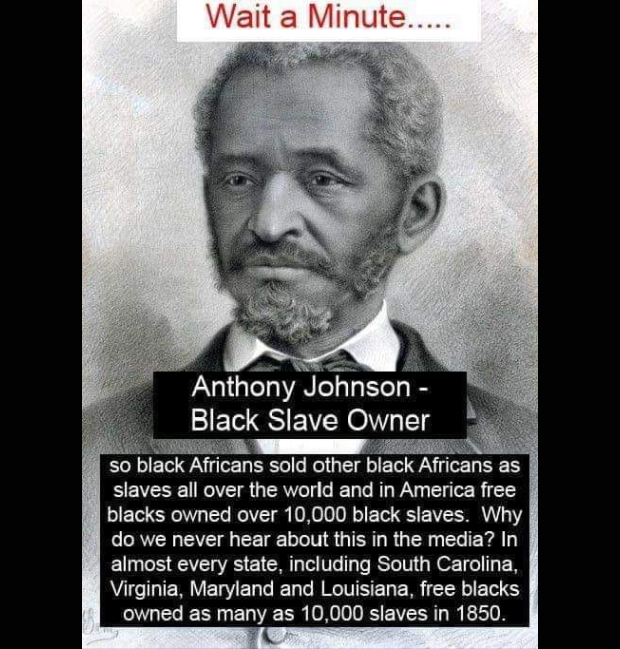
Slavery is one of the darkest periods in history, especially in the United States. The first US slave owner is a topic that has been widely debated over the years. Some people believe that Anthony Johnson, a black man, was the first slave owner in America. Others argue that it was a white man named John Casor. Regardless of who the first slave owner was, there is no denying the fact that slavery had a significant impact on the country and its people.
The Beginning of Slavery in America
The first Africans were brought to the United States in 1619 when a Dutch ship arrived in Jamestown, Virginia. The ship was carrying 20 enslaved Africans who were sold to the colonists. This marked the beginning of slavery in America. Over the next few centuries, millions of Africans were captured, transported, and sold into slavery in the United States.
The First US Slave Owner: Anthony Johnson

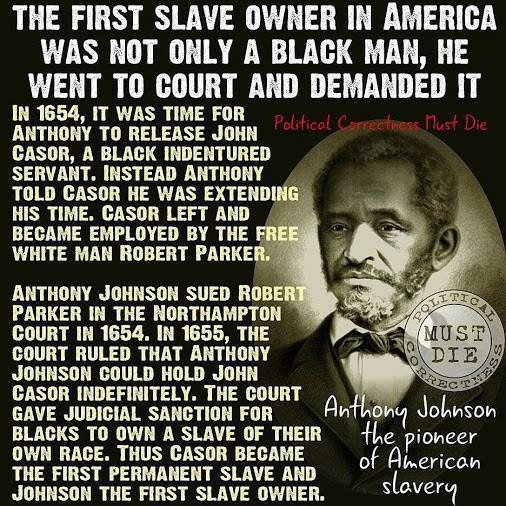
Anthony Johnson was a black man who arrived in Virginia in 1621 as an indentured servant. After completing his service, he became a successful tobacco farmer and even owned several slaves himself. In 1654, he sued one of his white neighbors, Robert Parker, for keeping one of his slaves, John Casor, beyond his indenture period. The court ruled in Johnson's favor, making Casor the first legally recognized slave in America.
Johnson's victory in court allowed him to keep Casor as his slave for life. He also continued to purchase slaves and became one of the wealthiest landowners in Virginia. Johnson's story is often cited as evidence that slavery was not exclusively a white institution.
John Casor: The First Legally Recognized Slave in America

John Casor was an African man who arrived in the Virginia colony as an indentured servant in 1640. He completed his service in 1647 but was not released by his master, Robert Parker. Instead, Parker sold him to Anthony Johnson. When Johnson sued Parker for holding Casor beyond his indenture period, the court ruled that Casor was legally Johnson's slave for life.
Casor's case was a significant turning point in the history of slavery in America. It established the legal precedent that slavery was a lifetime condition that could be inherited by children. This ruling paved the way for the growth of the slave trade and the brutal system of slavery that existed in America for centuries.
The Impact of Slavery in America

The legacy of slavery in America is still felt today. The brutal system of slavery tore families apart, stripped people of their dignity, and inflicted unimaginable pain and suffering on millions of people. Slavery also played a significant role in shaping the economic and social structures of the United States.
The effects of slavery can still be seen in the persistent racial inequalities that exist in the country today. African Americans continue to face discrimination and systemic barriers that prevent them from achieving equality in areas such as education, housing, and employment.
The Abolition of Slavery

The abolition of slavery in America was a long and difficult process that spanned several decades. The first state to abolish slavery was Vermont in 1777. It was not until 1865, however, that the 13th Amendment to the US Constitution officially abolished slavery throughout the country.
Although slavery no longer exists in the United States, the legacy of this dark period in history continues to shape the country and its people. It serves as a reminder of the importance of fighting for equality and justice for all.
Conclusion
The first US slave owner is a topic that has been widely debated over the years. Regardless of who the first slave owner was, the legacy of slavery in America is undeniable. It was a brutal system that inflicted unimaginable pain and suffering on millions of people and had a significant impact on the country's economic and social structures.
Although slavery has been abolished, its effects can still be seen in the persistent racial inequalities that exist in the country today. It is essential to remember the dark history of slavery in America and to work towards creating a more just and equitable society for all.
Related video of First US Slave Owner: The Dark History of Slavery in America

Introduction
Soccer, also known as football, is one of the most popular sports in the world. Millions of people play and watch it every day. But have you ever wondered when and where the first soccer game was played? In this article, we will explore the history of the first soccer game ever recorded.
The Origins of Soccer
The origins of soccer can be traced back to ancient civilizations, such as China, Greece, and Rome. However, the modern version of soccer was developed in England during the 19th century. The game was played by people from different social classes and was enjoyed by both men and women.
The First Soccer Game
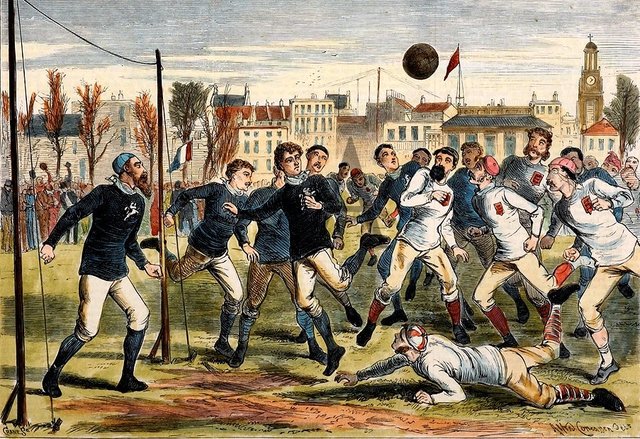
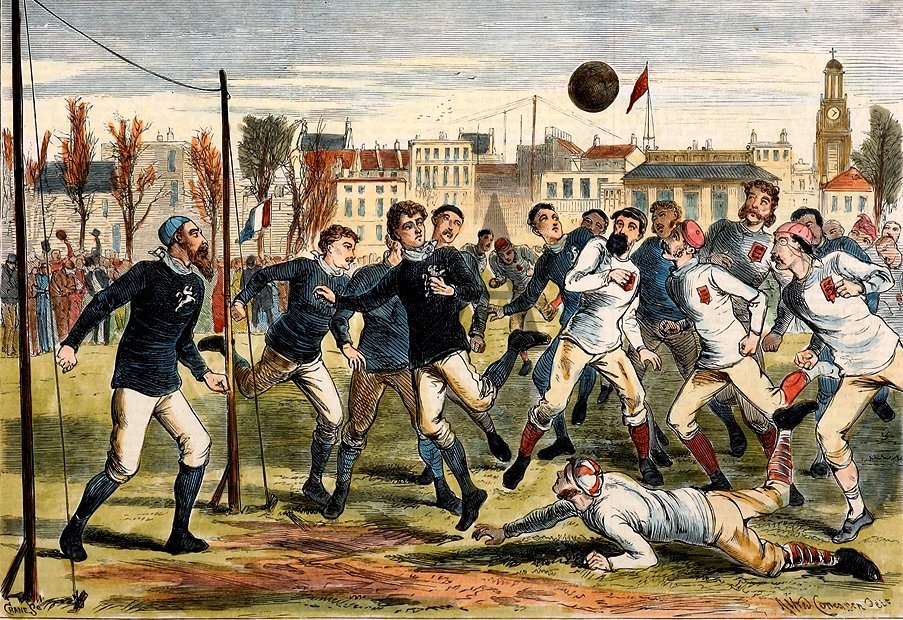
The first soccer game ever recorded took place in Edinburgh, Scotland, on March 5, 1872. The game was played between Scotland and England and ended in a 0-0 draw. The match was watched by around 4,000 spectators and was played according to the rules of the newly formed Football Association.

The Rules of the Game
The rules of the game were different from the ones we know today. For example, there were no crossbars, and the goals were made up of two vertical posts connected by a horizontal bar. The ball was also smaller and lighter than the modern ball, and there were no penalty kicks or yellow and red cards.

The Spread of Soccer
After the first soccer game, the sport quickly spread throughout the world. It was introduced to South America by British sailors and workers, and it became popular in countries such as Brazil, Argentina, and Uruguay. In Europe, soccer became a national sport, and many countries formed national teams to compete in international tournaments.

The First World Cup
The first World Cup was held in Uruguay in 1930 and was won by the host country. The tournament was a huge success, and it helped to popularize soccer even more. Today, the World Cup is the biggest sporting event in the world, with billions of people watching it on television.

The Evolution of Soccer
Over the years, soccer has evolved, and many changes have been made to the rules of the game. For example, the offside rule was introduced, and the size of the ball and the goals was standardized. The introduction of technology, such as the goal-line technology and the video assistant referee (VAR), has also improved the accuracy of the game.
The Popularity of Soccer
Today, soccer is the most popular sport in the world. It is played by millions of people in every corner of the globe and watched by billions of fans. The biggest clubs, such as Real Madrid, Barcelona, and Manchester United, have millions of followers on social media, and their games are broadcasted live to millions of viewers.
/cdn.vox-cdn.com/uploads/chorus_image/image/53062569/Fig1_GrantField1920.0.jpg)
Conclusion
The first soccer game ever recorded took place in Scotland in 1872, and since then, the sport has become one of the most popular in the world. Soccer has evolved over the years, and many changes have been made to the rules of the game. Today, soccer is played by millions of people and watched by billions of fans, making it a truly global sport.
Related video of First Soccer Game Ever Recorded

The first President of the United States of America was George Washington. He was born on February 22, 1732, in Westmoreland County, Virginia. He played a critical role in the American Revolution and was one of the Founding Fathers of the United States.
Early Life

George Washington was the eldest son of Augustine Washington and his second wife, Mary Ball Washington. His father died when he was only 11 years old, and he inherited a plantation and a few slaves. He received a basic education at home and learned how to become a surveyor.
Military Career

George Washington's military career began in 1753 when he was sent on a mission to deliver a message to the French in western Pennsylvania. In 1754, he was made a lieutenant colonel and led an attack on the French, which started the French and Indian War. He continued to serve in the military and became a hero in the American Revolution.
Revolutionary War

George Washington was appointed Commander-in-Chief of the Continental Army in 1775. He led the army to several victories, including the Battle of Trenton and the Battle of Princeton. He also suffered several defeats, but he never gave up. His leadership and determination were critical to the success of the American Revolution.
Presidency

George Washington was elected as the first President of the United States in 1789. He served two terms and was instrumental in establishing the federal government and the Constitution. He set many precedents, including the two-term limit and the use of the title "Mr. President."
Legacy

George Washington is considered one of the most important figures in American history. He was a hero in the American Revolution, a successful military commander, and a visionary leader. His legacy lives on today through the many institutions and landmarks named after him, including the Washington Monument and the United States Capitol.
Conclusion
George Washington was an extraordinary man who played a critical role in the birth of the United States of America. He was a hero, a leader, and a visionary. His legacy lives on today, and he will always be remembered as the first President of the United States.
Related video of First President Of USA

When it comes to identifying a person, their name is usually the first thing that comes to mind. However, there are some subtle differences between a person's first name and surname that many people may not be aware of. In this article, we will explore the differences between first names and surnames, and why they are important.
What is a first name?

A first name, also known as a given name or forename, is the name that is given to a person at birth or during their infancy. It is usually the name that is used to address a person on a daily basis, and is often chosen by the parents for its meaning or significance.
First names can come from a variety of sources, including religious texts, historical figures, or cultural traditions. They can also be influenced by current trends or popular culture.
What is a surname?

A surname, also known as a family name or last name, is the name that is shared by members of a family. It is usually inherited from the father or the mother's family, and is used to identify a person's ancestry or lineage.
Surnames can also come from a variety of sources, including geographic locations, professions, or personal characteristics. In some cultures, the surname can be changed or modified depending on marriage or other life events.
What are the differences between first names and surnames?

While both first names and surnames are used to identify a person, there are some key differences between them. First names are usually chosen by the parents and can be changed legally by the individual, while surnames are inherited and cannot be changed without legal processes.
Another difference is that first names are often used to address someone in an informal or personal setting, while surnames are used in formal or professional settings. For example, it is common to use someone's first name when addressing them in a social setting, but using their surname when addressing them in a business setting.
Why are first names and surnames important?

First names and surnames are important for several reasons. They provide a way to identify and differentiate individuals from one another, which is essential for communication and record-keeping purposes.
They can also be a source of cultural and personal identity, reflecting a person's family history, values, and beliefs. In some cultures, the first name or surname can have significant spiritual or religious meanings.
Conclusion
Although first names and surnames may seem like simple concepts, they are actually complex and important parts of our identities. Understanding the differences between them can help us better appreciate their significance and the role they play in our lives.
Related video of First Name Surname Difference

Mobile phones have become an indispensable part of modern life. From making phone calls and sending text messages to browsing the internet and playing games, we use our mobile phones for just about everything. But have you ever wondered when the first mobile phone call was made? Let's take a trip down memory lane and find out.
The Invention of the Telephone

Before we can talk about the first mobile phone call, we need to go back to the invention of the telephone. Alexander Graham Bell is credited with inventing the telephone in 1876. The first telephone was a simple device that allowed people to transmit their voices over a wire.
Over the years, the telephone evolved and became more sophisticated. In the early 20th century, telephones became a common feature in homes and offices, and telephone networks were established to connect people across the world.
The Birth of the Mobile Phone

It wasn't until the 1970s that the first mobile phones were developed. The first mobile phone was a large, heavy device that was only used by a few people. It was expensive, and the call quality was poor.
Over the years, mobile phones became smaller, lighter, and more affordable. By the 1990s, mobile phones had become a common sight, and people could make phone calls from just about anywhere.
The First Mobile Phone Call

So, when was the first mobile phone call made? On April 3, 1973, Martin Cooper, a Motorola engineer, made the first mobile phone call from a prototype of what would become the first commercially available mobile phone, the Motorola DynaTAC 8000x.
The call was made to Joel Engel, head of research at Bell Labs, a rival company. Cooper reportedly said, "I'm ringing you just to see if my call sounds good at your end."
The Impact of the First Mobile Phone Call

The first mobile phone call may seem like a small event, but it had a huge impact on the world. It paved the way for the development of mobile phones and changed the way we communicate. Today, mobile phones are an essential part of modern life, and we can't imagine living without them.
Conclusion
From the invention of the telephone to the birth of the mobile phone, we've come a long way in the world of communication. The first mobile phone call was a groundbreaking moment that changed the world forever. It's amazing to think that a simple phone call could have such a huge impact on our lives.
Related video of First Mobile Phone Call: A Look Back in Time

Ice cream has become a beloved dessert around the world. It's hard to imagine a hot summer day without indulging in this sweet treat. But where did it all begin? Who invented the first ice cream?
Ancient Ice Cream

The origins of ice cream date back to ancient China, where it was believed to have been invented during the Tang dynasty (618-907 AD). The Chinese would mix snow with milk and rice to create a cold, sweet treat. This was the first recorded instance of something resembling ice cream.
Ice Cream in Persia

During the 5th century BC, Persians would pour grape juice over snow and eat it as a delicacy. They also mixed fruits, nuts, and rosewater with snow to create a dessert called "faloodeh." This was the first recorded instance of flavored ice cream.
Ice Cream in Europe

Ice cream eventually made its way to Europe in the 16th century. Catherine de' Medici, an Italian noblewoman who married the French king, introduced the dessert to the French court. It quickly became a popular treat for the wealthy.
American Ice Cream

The history of ice cream in America is a bit unclear, but it's believed that the first ice cream shop was opened in New York City in 1776. Ice cream became a popular treat in America, especially during the hot summer months.
Who Invented Ice Cream?

While no one person can be credited with inventing ice cream, many cultures and individuals played a role in its creation. The Chinese, Persians, and Europeans all contributed to the evolution of ice cream. It wasn't until the 20th century that ice cream became widely available to the masses.
Conclusion
The history of ice cream is a long and fascinating one. From ancient China to modern-day America, ice cream has become a beloved treat enjoyed by people of all ages. While the origins of ice cream may be a bit unclear, one thing is for sure: we're grateful for whoever invented this delicious dessert!
Related video of First Ice Cream Invented

Introduction
Disney movies have always been a favorite of children and adults alike. From animated classics like Snow White and the Seven Dwarfs to modern-day blockbusters like Frozen, Disney has captured the hearts of millions. However, did you know that not all Disney movies are suitable for children? The first Disney movie to be rated PG was a surprise to many fans.
Background
In 1984, Disney released a movie called "Splash" starring Tom Hanks and Daryl Hannah. The movie was a romantic comedy about a man who falls in love with a mermaid. Although the movie was a hit with audiences, it was also the first Disney movie to receive a PG rating from the Motion Picture Association of America (MPAA).

Reason for PG Rating
The reason for the PG rating was due to a brief nudity scene featuring Daryl Hannah. In the scene, Hannah's character sheds her mermaid tail and is briefly shown nude from the side. The scene was not gratuitous or sexual in nature, but it was enough to warrant a PG rating.
Impact on Disney
The PG rating for "Splash" was a surprise to many fans, as Disney had always been known for producing wholesome, family-friendly movies. However, the rating did not have a significant impact on Disney's reputation or box office success. In fact, "Splash" went on to become a box office hit and is still beloved by many fans today.

Other Disney Movies Rated PG
Since the release of "Splash," Disney has produced several other movies that have received a PG rating. Some of these movies include:
- The Lion King (1994)
- The Hunchback of Notre Dame (1996)
- Mulan (1998)
- Atlantis: The Lost Empire (2001)
- Tangled (2010)
These movies were rated PG for various reasons, including violence, scary scenes, and mature themes.

Conclusion
The first Disney movie to be rated PG was "Splash" in 1984. The reason for the rating was due to a brief nudity scene featuring Daryl Hannah. Despite the rating, the movie was a box office hit and is still beloved by many fans today. Since then, Disney has produced several other movies that have received a PG rating for various reasons. Despite some controversy over the years, Disney remains a beloved brand and a leader in the entertainment industry.
Related video of First Disney Movie Rated PG

The first code of laws ever recorded was the Code of Hammurabi, which was written in ancient Babylon in 1754 BC. The code is named after the king of Babylon, Hammurabi, who commissioned its creation. The code is a set of laws that dictated how people in ancient Babylon should behave and interact with each other. It is considered one of the most important legal codes ever created and has had a significant impact on the development of law and justice systems throughout the world.
The Origins of the Code of Hammurabi

The Code of Hammurabi was created during the reign of King Hammurabi, who ruled over Babylon from 1792 BC to 1750 BC. Hammurabi was a powerful king who conquered many neighboring territories and established Babylon as the dominant city-state in the region. He commissioned the creation of the code in order to establish a set of laws that would govern his kingdom and ensure justice for all his subjects.
The Content of the Code

The Code of Hammurabi contained 282 laws that covered a wide range of topics, including marriage, property rights, trade, and crime. The laws were written in cuneiform script on a stele, which was a large stone pillar that was placed in a public area of Babylon so that everyone could read them. The code was written in Akkadian, which was the common language spoken in Babylon at the time.
The Legacy of the Code of Hammurabi
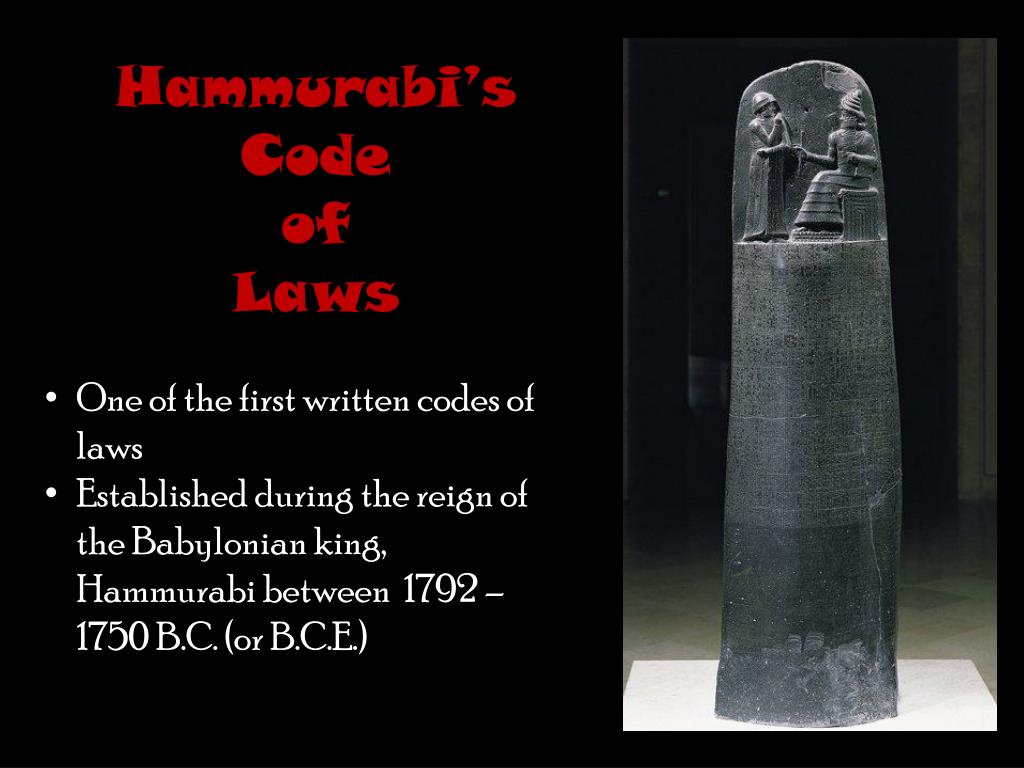
The Code of Hammurabi had a profound impact on the development of law and justice systems throughout the world. It established the principle of "an eye for an eye," which means that the punishment for a crime should be equal to the harm caused by the crime. This principle has been incorporated into many legal systems and is still used today. The code also established the idea that everyone, regardless of their social status or wealth, should be subject to the same laws, which is a fundamental principle of modern democracy.
The Importance of the Code of Hammurabi

The Code of Hammurabi is important because it was the first written set of laws ever created. It established the idea that laws should be written down and made public, which gave people a sense of security and predictability. The code also established the idea that laws should be fair and just, and that everyone should be subject to the same laws, regardless of their social status or wealth. These principles have been incorporated into many legal systems throughout the world and have helped to create more just and equitable societies.
The Enduring Legacy of the Code of Hammurabi

The Code of Hammurabi has endured for more than 3,750 years and continues to influence the development of law and justice systems throughout the world. It established the idea that laws should be written down and made public, which is still an important principle of modern democracy. The code also established the principle of "an eye for an eye," which is still used in many legal systems today. The enduring legacy of the Code of Hammurabi is a testament to the enduring power of ideas and the importance of justice and fairness in human societies.
Conclusion
The Code of Hammurabi is a remarkable achievement of ancient civilization. It established the idea that laws should be written down and made public, and that everyone, regardless of their social status or wealth, should be subject to the same laws. The enduring legacy of the code is a testament to the power of ideas and the importance of justice and fairness in human societies. The code has had a profound impact on the development of law and justice systems throughout the world and will continue to inspire and inform future generations.